Commercial property in Oxford County sits at a practical crossroads. You have the 401 and 403 moving freight and people, the Toyota plant in Woodstock that anchored new suppliers, and an industrial legacy in Ingersoll and Tillsonburg that continues to adapt. Land values have climbed unevenly, small-bay industrial vacancy tightened after 2020, and many older retail strips are still finding their post-pandemic footing. Against that backdrop, the quality of a commercial real estate appraisal has very real consequences for buyers, owners, lenders, and municipalities. Getting it right means understanding how this market actually behaves block by block, not just in theory.
This guide explains how a commercial appraiser approaches Oxford County properties, what drives value here, which documents to prepare, how long the work tends to take, and how to evaluate commercial appraisal services so you end up with a report your lender and partners trust.
What a commercial appraisal really answers
A credible valuation clarifies three linked questions. What is the property most likely to be used for legally and financially. What evidence supports a value opinion at a specific effective date. How sensitive is that opinion to the assumptions about income, expenses, market conditions, financing, and risk. In Oxford County, thin data and heterogenous assets make those questions trickier than they appear. A tidy plaza at Norwich Avenue with national tenants lends itself to straightforward rent rolls and published cap rates. A 1960s shop building north of the 401 with 14-foot clear, duct-taped radiant heat, and a tenant on a handshake deal does not.
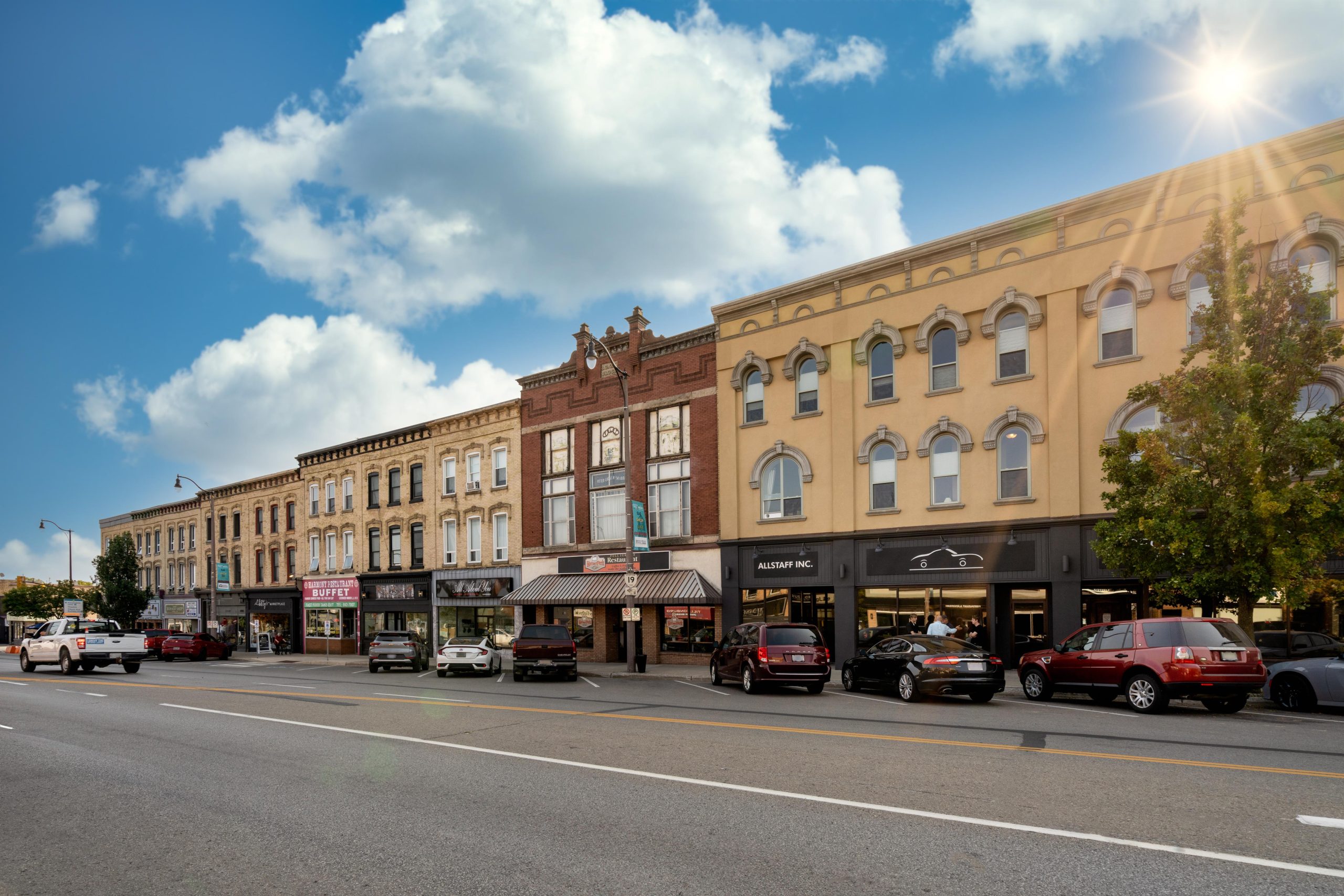
When you hire a commercial appraiser in Oxford County, you are paying for more than formulas. You are buying practical judgement about which comparables matter and why, what adjustments actually hold up, and how municipal, environmental, and building realities could challenge or support a value conclusion.
Local context that influences value
Several Oxford County patterns show up repeatedly in commercial property appraisal:
- Transportation proximity compresses cap rates for functional industrial. Sites within five to ten minutes of the 401 interchanges in Woodstock and Ingersoll typically trade tighter than similar buildings farther south or in rural pockets. A 24-foot clear small-bay unit with shipping depth that works for modern logistics will attract stronger buyer demand than an older, low-clear plant out of the way, even if the latter has more square footage. Owner-occupied industrial is common. In valuations for financing or succession planning, the appraiser must normalize contract rent, sometimes moving from business-advantaged internal rents to market levels. The market pays for the real estate’s utility and risk, not the health of the operating company. Multi-tenant retail depends on parking, egress, and tenant mix more than glossy finishes. A plaza with two curb cuts, visibility from a controlled intersection, and a grocery anchor commands very different investor interest than a side-street strip with short-term local tenants. Oxford’s grocery-anchored neighbourhood centres often underwrite more like regional assets than the county’s population numbers might suggest. Purpose-built rentals of five units or more are increasingly institutionally financed. Lenders and CMHC want coherent market rent support, exposure time estimates, and defensible expense ratios. Having separation between real and personal property, along with a clean environmental file, matters. Agricultural-commercial hybrids have quirks. Grain handling, cold storage, and on-farm processing present valuation splits between agricultural and commercial utility. Highest and best use analysis drives the choice of approach and the weight you put on each.
These details are obvious to anyone who has walked enough buildings in the county. They also explain why a commercial real estate appraisal in Oxford County is not a copy-paste from a bigger city template.
The role of standards and designations
If your appraisal is going to a Schedule I bank, a pension fund, or CMHC, expect specific requirements. In Ontario, most lenders want an AACI, P.App designated appraiser, operating under the Appraisal Institute of Canada’s Canadian Uniform Standards of Professional Appraisal Practice. Some cross-border lenders will reference USPAP familiarity, but CUSPAP governs Canadian practice. For litigation, expropriation, and tax appeals, the appraiser should have demonstrable experience in those assignments and comfort with expert testimony where needed.
Ask about quality control. A reliable commercial appraisal services provider in Oxford County should have internal peer review and software or manual checks for math, comp selection, and narrative consistency. A thinly supported direct comparison section or a cap rate conclusion without evidence from recent sales and listings is where lender reviews go sideways.
Approaches to value, applied to Oxford County assets
Three primary methods appear in commercial appraisals, often with different weights depending on asset type and data strength.
Income approach. For leased assets or properties with market rent potential, the appraiser models stabilized net operating income, applies a capitalization rate, or uses discounted cash flow if justified. Lease audit quality matters. In Oxford County, a gross lease at a small strip with tenants paying a flat rate can hide utility responsibilities, snow https://rivertgos222.yousher.com/valuing-owner-occupied-properties-commercial-appraisal-oxford-county removal burdens, and episodic repairs that belong in the expense line. Stabilization adjustments are not fluff, they are the difference between an accurate valuation and a rosy guess. Cap rates vary widely. Small-bay industrial with drive-in doors near the 401 and clean environmental history might support cap rates in the upper 5s to low 7s depending on tenant quality and term, while older specialized buildings, rural retail, or short remaining lease terms can push rates higher. The appraiser should show the market support for the chosen rate, not just cite a number.
Direct comparison approach. Sales evidence can be sparse. A well-located 10,000 square foot building in Woodstock may have no perfect recent analogues. That is where reasoned adjustments come in, supported by paired sales where available, listing data, marketing times, and interviews. In secondary markets, a mix of confirmed sales and on-market deals often gives the truest picture, because off-market trades and vendor-take-back financing can distort the apparent numbers. In my experience, one verified inferior sale with clean terms can be more useful than five anecdotes.
Cost approach. Used mostly for special-purpose or newer construction where depreciation can be reasonably estimated. A cold storage facility in rural Oxford with heavy insulation and specialized mechanicals needs a careful look at replacement cost new, entrepreneurial profit, functional obsolescence, and external depreciation. For older stock in town, the cost approach typically plays a supporting role because accrued depreciation is hard to pin down without deep building forensics.
The best commercial appraiser in Oxford County will explain not only which method drives the final value, but also why the others were down-weighted.
When the data is thin
Secondary markets punish lazy comp selection. An appraiser who pulls Toronto or Kitchener cap rate surveys and pastes them into an Oxford County report without translation is missing the point. Local broker interviews, confirmed sale terms, marketing periods pulled from MLS or internal databases, and tax assessment checks via MPAC or municipal rolls fill the gaps. Deed transfers through Teranet or GeoWarehouse, MPAC site details, and building permits data from municipal portals give grounding. The job is forensic: test each piece of evidence, reconcile contradictions, and be explicit about uncertainty.
For example, a small industrial condo in Woodstock might have three sales in the last 18 months, but two involved related parties and one had atypical vendor financing. A savvy appraiser will disclose the context, adjust for atypical terms where possible, or remove the sales and expand the search radius to comparable markets with similar demand drivers.
What a thorough scope looks like
A scope of work that satisfies lenders and investors in this county usually includes interior and exterior inspection, lease review, zoning confirmation, highest and best use analysis, market rent and expense support with local data, exposure time and marketing period estimates, and a summary of environmental and building condition issues that affect value. Restricted-use or desktop reports rarely fit commercial lending in Oxford County unless the property is very simple and the loan-to-value is conservative.
For large assignments, expect the appraiser to consult planning staff for pending zoning changes, review site plan agreements, and check for encumbrances and easements that could limit redevelopment options. A highest and best use section that simply repeats the current use without analysis is a red flag if the site has any redevelopment potential.
A realistic timeline from instruction to delivery
Every property and lender is different, but repeatable patterns exist for commercial appraisal oxford county assignments with complete document packages.
- Kickoff and engagement. Two to three business days to finalize scope, quote, and receive a signed letter of engagement along with initial documents. Inspection and data collection. Three to seven days, depending on tenant access and management responsiveness. Analysis and drafting. Seven to ten days for most single-asset commercial properties, longer for portfolios or complex assets with environmental or structural issues. Internal review and finalization. Two to four days, including revisions after client or lender questions. Delivery and lender review. The lender’s credit team timing varies. Expect three to ten days for review, with occasional follow-up questions.
This is not a promise, it is the rhythm of efficient files. The main delays are usually missing leases, unclear rent histories, and slow third-party confirmations.
What to prepare before the appraiser arrives
A property owner or broker can trim a week off the process by assembling the right information up front. The essentials rarely change, but owners often overlook a few of them.
- Current rent roll with lease abstracts, including options, rent steps, expense responsibilities, and expiry dates. Three years of operating statements that separate controllable and non-controllable expenses, plus capital expenditures with dates and costs. Copies of all leases and amendments, recent offers to lease, and records of inducements or landlord work. A recent environmental report if available, building condition or roofing reports, and any fire inspection notices or permits. Survey, site plan, and as-built drawings if you have them, plus a list of building systems and recent upgrades with invoices.
If the property is owner-occupied, substitute a breakdown of current occupancy, internal rent if any, and a credible estimate of the space that could be leased within six to twelve months at market terms.
Municipal and regulatory checks that matter
Zoning in Oxford County is straightforward until it is not. A light industrial site that looks like it could support outside storage may have a zoning quirk that limits yard use. A retail pad that seems perfect for a drive-through can run into stacking requirements and site plan constraints. An appraiser should confirm current zoning, permitted uses, parking minimums, and any site-specific exceptions. If the highest and best use analysis leans toward redevelopment, servicing capacity and frontage requirements come into play quickly.
Environmental considerations weigh more heavily here due to the region’s manufacturing history. A Phase I ESA that flags historical filling stations, dry cleaners, or metals usage is not the end of the world, but it affects lender comfort, cap rates, and sometimes the choice of approach. If a Phase II exists, the summary of contaminants of concern and any risk assessments should be part of the appraisal file.
Fire separations and life safety are frequent value levers in older mixed-use buildings. If residential units sit above a commercial main floor in downtown cores, the presence or absence of proper separations, interconnected alarms, and compliant egress plans changes both insurability and financeability. An appraiser does not certify code compliance, but they do need to understand how these issues influence marketability.
Property type nuances across the county
Industrial. Ceiling height, loading, power, bay size, and yard depth set the tone. Ingersoll and Woodstock small-bay units with flexible loading tend to lease faster than deep-bay legacy plants with limited docks. Investors scrutinize rollover risk on short terms, especially when the only tenant is a specialized user. For owner-occupied buildings, a move to market lease-up assumptions is standard in the income approach.
Retail. Traffic counts, visibility, and co-tenancy drive rents. A food-anchored centre on a strong arterial with simple egress outperforms a pretty façade tucked behind a berm with a right-in, right-out struggle. Rents can look firm until a key tenant rolls over; then inducements and landlord work quickly show up in effective rent. Expect the appraiser to adjust to effective rents and to test expense recoveries.
Office. Local office demand is steady but not speculative. Medical and professional uses in well-located buildings see consistent occupancy, while commodity office space competes on parking and fit-out quality. Tenant improvements may be capitalized differently by buyers, so the appraiser needs to separate landlord capital from ongoing operating items.
Multi-residential, 5+ units. CMHC underwriting emphasizes market rent, vacancy, and expense normalization. Renovation cycles, unit mix, and compliance with fire code meaningfully affect value. A building in Tillsonburg with a sensible unit mix and recent boiler replacement will underwrite tighter than a similar one with piecemeal upgrades and uncertain life safety.
Special-purpose. Cold storage, automotive service, on-farm processing, and recreational facilities require careful cost and obsolescence analysis. A commercial property appraisal in Oxford County for a grain handling site, for example, should address whether the salvage value of equipment is part of real property or personal property, and then reconcile how market participants treat it.
How lenders look at your report
Most banks in this region maintain appraisal review teams that examine methodology, comparables, and assumptions. They look for:
- Clear linkage from rent roll to stabilized NOI, with realistic vacancy and non-recoverable expense assumptions. Comparable sales and listings that are recent and relevant, with transparent adjustments. Cap rate support grounded in local or closely analogous markets, with commentary on tenant covenant and term. Exposure time and marketing period estimates that match observed conditions. Disclosures of any extraordinary assumptions and hypothetical conditions.
If a report glosses over any of these, the lender will ask for revisions or discount the conclusion. In refinance scenarios with higher leverage, the lender’s sensitivity analysis may be more conservative than the appraiser’s. Expect questions rather than surprises if your appraiser has done a good job explaining their judgment.
Fees, timing, and choosing the right firm
Fees in Oxford County vary by complexity, access to data, and reporting format. A straightforward single-tenant industrial building with complete documentation and recent market evidence is at the lower end, while multi-tenant, special-purpose, or environmentally complex assets push fees up. Turn times track fees, but the best predictor of schedule is how quickly owners provide accurate documents and how promptly tenants grant access.
When selecting a commercial appraiser in Oxford County, references from local lenders and brokers carry more weight than a flashy brochure. Ask about recent assignments within ten kilometers of your property type, request sample redacted reports, and verify designations and insurance. A provider who can explain their plan in plain language before you engage will typically write a report that lenders can navigate without hand-holding.
What owners and buyers often miss
Two recurring blind spots show up in files across the county. First, embedded capital needs. A roof at year 17 of a 20-year warranty is not a hypothetical issue. Buyers and lenders will underwrite reserves, and appraisers will note the timing and likely cost. Second, zoning-driven parking or loading constraints. A site with beautiful interiors but inadequate stacking for a drive-through or too few spaces for medical office use will see diminished rent potential and higher downtime.
Another subtle point is vendor-take-back financing. It is common in private sales of small commercial assets. VTBS can nudge price higher than cash-equivalent market value. A careful appraisal will normalize for these terms. If you plan to offer a VTB, discuss it with your appraiser; it will change the interpretation of comparable sales.
Handling tax appeals, expropriation, and litigation
A commercial appraisal oxford county assignment for assessment appeal or litigation is its own discipline. The measure of value might differ from typical market value for financing. In expropriation matters, injurious affection, disturbance damages, and business loss can complicate the picture. Choose an appraiser who has testified, who understands disclosure obligations, and who can separate narrative advocacy from analytical rigor. Lenders and tribunals read reports differently; the appraiser should tailor the scope to the assignment while maintaining standards.
Looking ahead
Oxford County’s industrial base continues to modernize. Electrification in automotive, logistics optimization, and small-bay demand from trades and suppliers should keep functional industrial values supported, especially near the 401 and 403. Retail will likely drift toward service and food uses that cannot migrate fully online, with landlords improving access and signage rather than splurging on finishes that do not raise rent. Purpose-built rentals will remain active, paced by financing conditions and construction costs.
What does that mean for a valuation today. Stability in the middle, caution at the edges. Properties with clear utility, stable tenants, and compliant buildings will underwrite predictably. Niche or obsolete assets will see a growing gap between seller expectations and buyer pricing, and appraisals will reflect that with wider sensitivity ranges and more reliance on qualitative adjustments.
Putting it into practice
If you are ordering a commercial property appraisal oxford county for a purchase, refinance, or estate plan, align three elements. Clarify your scope and intended use so the appraiser can meet your lender’s needs. Assemble the core documents before the inspection so the schedule holds. Select a commercial appraiser oxford county who shows their work, not just their designation. The right partner will walk the building with a contractor’s eye, read the leases like a lender, and write a report that stands up when the bank or an opposing expert starts asking hard questions.
A final practical note. Markets move, but not all at once. An appraisal is a point-in-time opinion, supported by evidence available at that date. In fast or thin markets, the most valuable part of the report can be the sensitivity discussion, the scenarios showing how value shifts if cap rates widen by 50 to 100 basis points or if market vacancy reverts to its longer-term average. Ask for that analysis if it is not already in the scope. It turns a static number into a tool you can actually use.
With that mindset, commercial appraisal services oxford county become more than a checkbox. They become a disciplined way to make better decisions about properties that carry real capital and community weight.